AI data center and GPU financing
GPU clouds and AI data centers pay for land, power and equipment long before contracted capacity turns into recurring receipts. Financing bridges that gap. This guide covers how the gap forms, the structures that fund it, and what a lender needs to see.
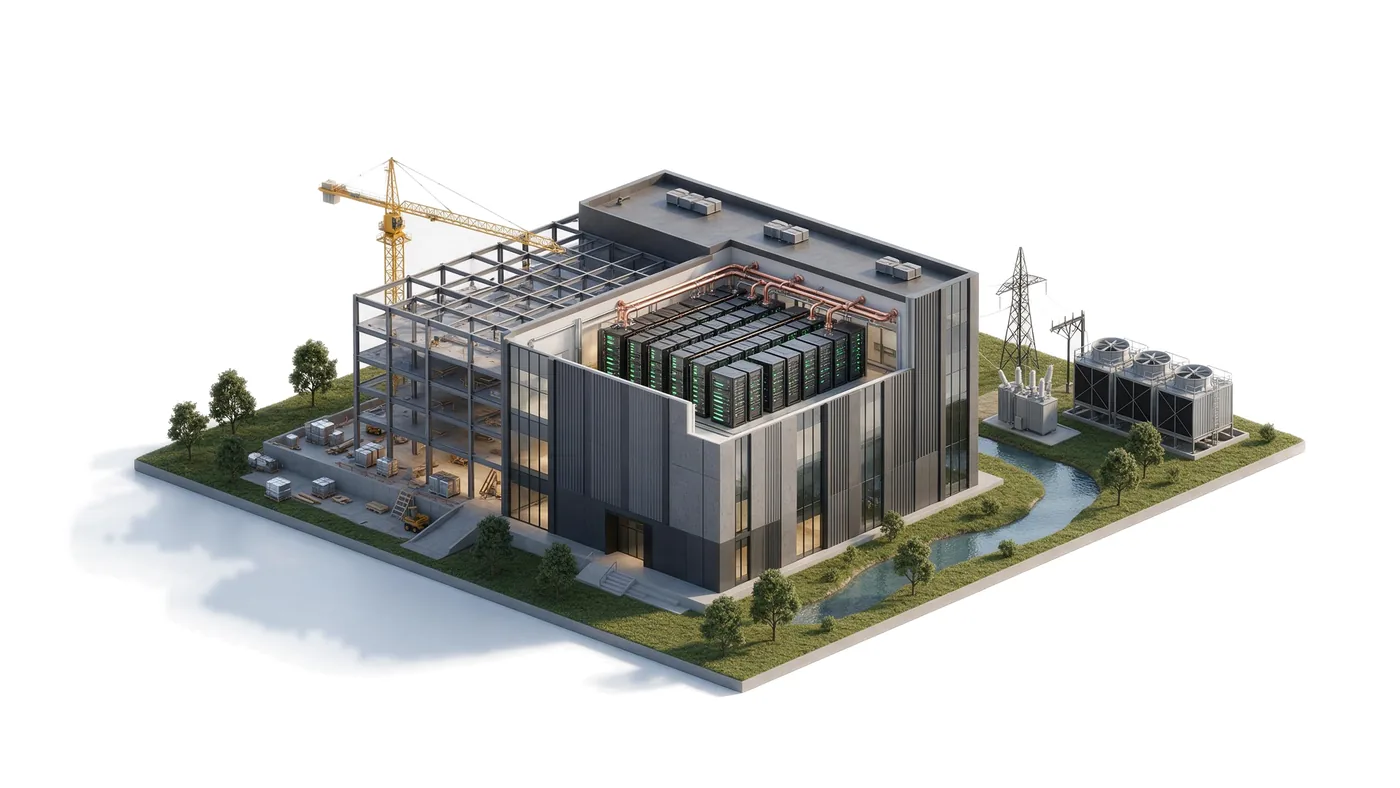
The gap: equipment now, receipts later
An operator arranges land or space, electricity, cooling, networking and GPUs, then commissions the capacity. Deposits, advance payments or delivery payments depend on supplier terms. Customer billing usually starts only after go-live.
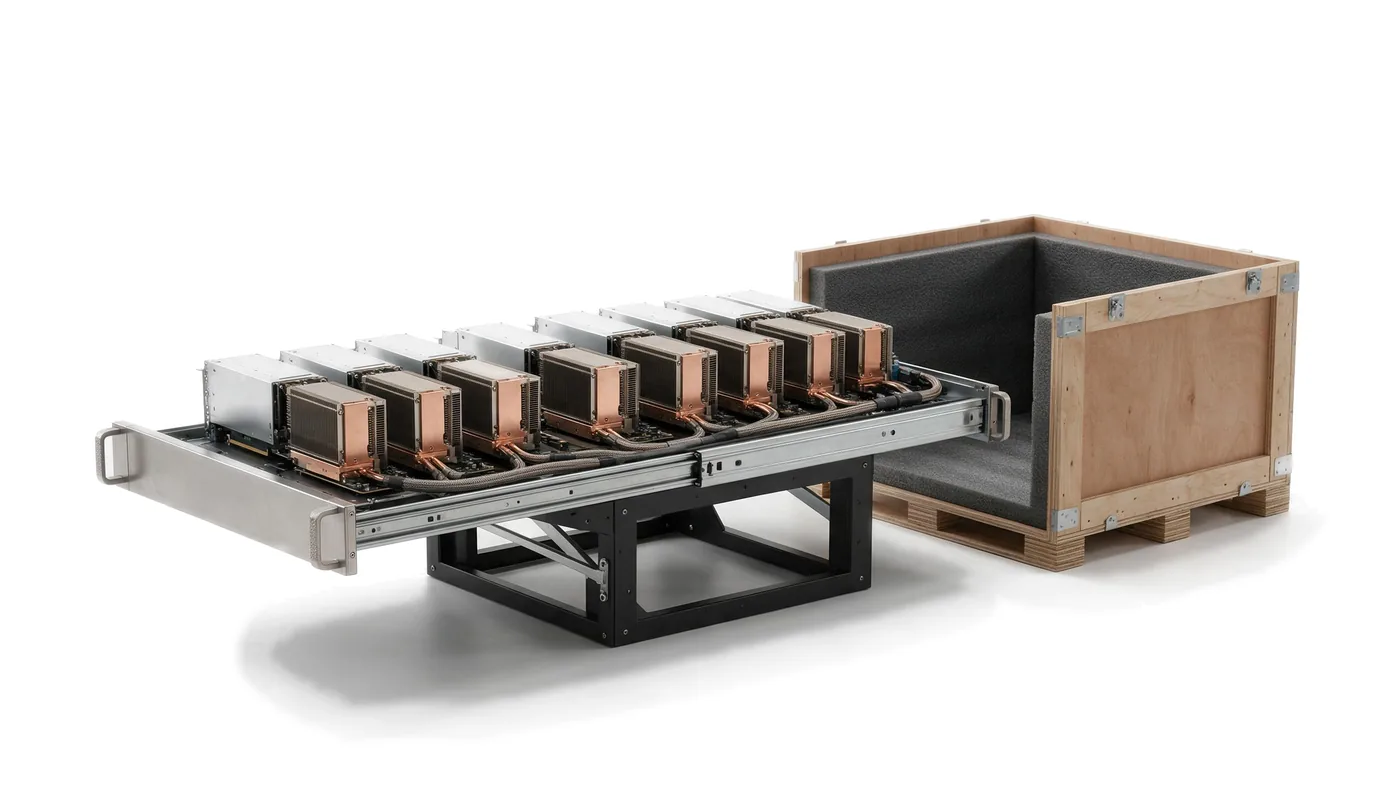
CoreWeave’s 2025 filing is a public example: two-to-five-year take-or-pay capacity contracts, customer prepayments, monthly billing after go-live, and equipment suppliers generally paid on delivery. The gap is upfront investment versus future receipts, not a universal need to prepay GPU manufacturers.
Customer advances help but rarely close the gap. IREN’s November 2025 Microsoft agreement pairs a five-year, roughly US$9.7 billion contract carrying a 20% prepayment with a separate, roughly US$5.8 billion equipment purchase from Dell.
Identify the operator, the owner and the borrower
A pure colocation operator may provide the building and power without owning the GPUs. Before any structure is chosen, separate four parties:
- The site operator (building, power, cooling)
- The GPU owner (the asset)
- The customer (who pays for capacity)
- The borrower (who owes the lender)
Data center financing structures compared
| Structure | What it funds | Repaid from | Best fit |
|---|---|---|---|
| Contract-backed deployment finance | Equipment and commissioning | Contracted capacity receipts | Operators with signed take-or-pay customers |
| Equipment or asset finance | GPUs and servers | Receipts, with the equipment as security | Operators who own the hardware outright |
| Customer prepayment | Part of deployment | Delivered capacity | Large anchor customers willing to prepay |
| Receivables finance | Working capital after go-live | Accepted customer invoices | Operators already billing monthly |
A longer comparison is in data center financing structures compared. A step-by-step view for a single cluster is in how to finance a GPU cluster.
What lenders check
- Customer contract quality: tenor, take-or-pay terms, termination and refund rights
- Delivery milestones and commissioning dates
- Asset ownership, installation, insurance, maintenance and recoverability
- Debt-service capacity once billing starts
- Concentration: how much depends on one customer
Who already finances AI infrastructure
Large operators already access substantial finance. CoreWeave announced a US$7.5 billion debt facility led by Blackstone and Magnetar in May 2024. The harder segment is smaller operators and distributors whose obligations are prepaid credits, minimum commitments or variable usage rather than completed receivables.
From crypto mining to AI hosting
The overlap between mining and AI infrastructure is real but specific. IREN expanded its AI GPU fleet while redeploying mining ASICs to other sites. What transfers is sites, grid connections, operating experience and access to capital. Mining machines do not become AI GPUs, and a mining history does not prove a current crypto balance.
How STABO helps
STABO lends against identified obligations and works with specialist funding partners for large asset and deployment financing. Alongside the facility, STABO runs the payments: supplier deposits, equipment payments, customer advances and debt service, across fiat and stablecoins, with each payment tied to its purpose.
Questions
What is GPU financing?
Funding for GPUs and the servers, networking and deployment around them, usually repaid from contracted capacity receipts and supported by rights over the equipment.
Do AI data centers have to prepay GPU manufacturers?
Not always. Supplier terms vary. CoreWeave, for example, states that it generally pays equipment suppliers on delivery. The consistent gap is paying for equipment before customer receipts arrive.
Can GPUs be used as collateral?
They can support a loan, but lenders weigh ownership, installation, insurance, maintenance and how quickly the hardware loses value. Contracted receipts usually matter more than the resale value of the equipment.
How do customer prepayments affect financing?
They reduce the amount to be financed but rarely remove it. In IREN’s Microsoft agreement, a 20% prepayment sits alongside a separate multi-billion-dollar equipment purchase.
Talk to STABO
Bring a supplier bill, a minimum-spend contract or a stablecoin receipt. We will show how it settles and what it can fund.
Talk to usSources
- CoreWeave, Form S-1, filed 3 March 2025
- IREN, US$9.7 billion Microsoft AI cloud agreement, 3 November 2025
- CoreWeave, US$7.5 billion debt facility led by Blackstone and Magnetar, 17 May 2024
- IREN, AI cloud expansion to 23,000 GPUs, 22 September 2025
Figures about other companies come from their public filings and announcements. Descriptions of STABO’s own activity reflect STABO management as of September 2026.